In today’s housing market, energy efficiency is more than just a trend; it’s a key factor in long-term savings, environmental impact, and overall home comfort. One of the most widely recognized tools for measuring a home’s energy performance is the HERS Index. But what exactly is a HERS energy rating, and how is it calculated?
Whether you’re a homeowner, buyer, or builder, understanding the HERS (Home Energy Rating System) Index can help you make smarter decisions about energy use and property value. In this guide, we’ll break down how the system works, how homes are scored, and what those scores really mean for your energy bills.
What Is a HERS Energy Rating?
The HERS Index is a standardized scoring system used to measure a home’s energy efficiency. Developed by the Residential Energy Services Network (RESNET), it provides a clear, numeric value that represents how efficiently a home uses energy compared to a reference home.
The scale typically ranges from 0 to over 100:
- A score of 100 represents a standard new home built to code
- A score of 0 indicates a net-zero energy home (producing as much energy as it consumes)
- Scores above 100 reflect homes that are less efficient than the baseline
In simple terms, the lower the HERS score, the more energy-efficient the home.
Why the HERS Index Matters
Understanding a home’s HERS rating offers valuable insight into its performance. For homeowners and buyers, it provides a reliable way to estimate energy consumption and potential utility costs.
A lower HERS score means:
- Reduced energy bills
- Improved indoor comfort
- Lower environmental impact
- Increased property value
For builders, achieving a strong HERS rating can also be a selling point, demonstrating a commitment to high-performance construction.
How Is a HERS Score Calculated?
A HERS rating is not a rough estimate; it’s a detailed assessment conducted by a certified HERS rater. The process combines on-site inspections, performance testing, and energy modeling to generate an accurate score.
Here are the key components involved in calculating a HERS Index:
1. Energy Modeling
The process begins with creating a digital model of the home. This model simulates how the house uses energy based on its size, layout, materials, and systems.
The model compares the home to a “reference home” of the same size and shape but built to standard energy code. This comparison forms the foundation of the HERS score.
2. Insulation and Building Envelope Assessment
The building envelope, walls, roof, windows, and doors, plays a critical role in energy efficiency. A HERS rater evaluates:
- Insulation levels
- Window performance
- Air sealing quality
Better insulation and tighter construction reduce energy loss, resulting in a lower (better) HERS score.
3. HVAC System Efficiency
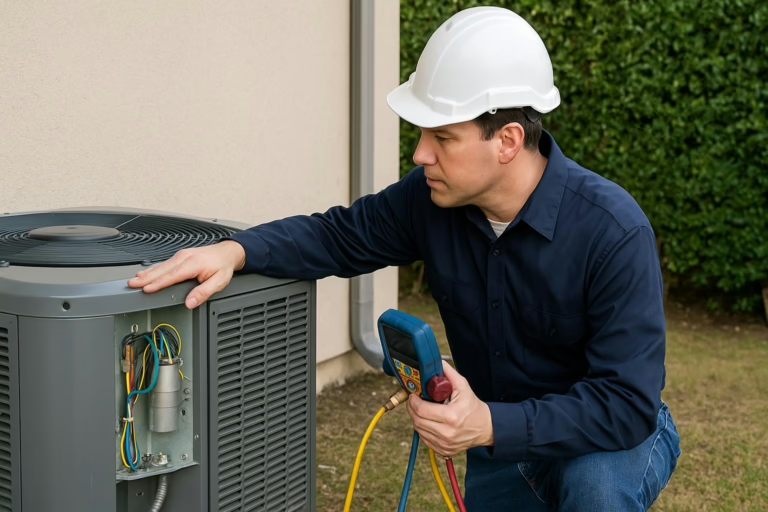
Heating, ventilation, and air conditioning (HVAC) systems are major contributors to a home’s energy use. The rater examines:
- System efficiency ratings
- Ductwork condition and leakage
- Proper sizing and installation
High-efficiency systems can significantly improve the overall score.
4. Air Leakage Testing (Blower Door Test)
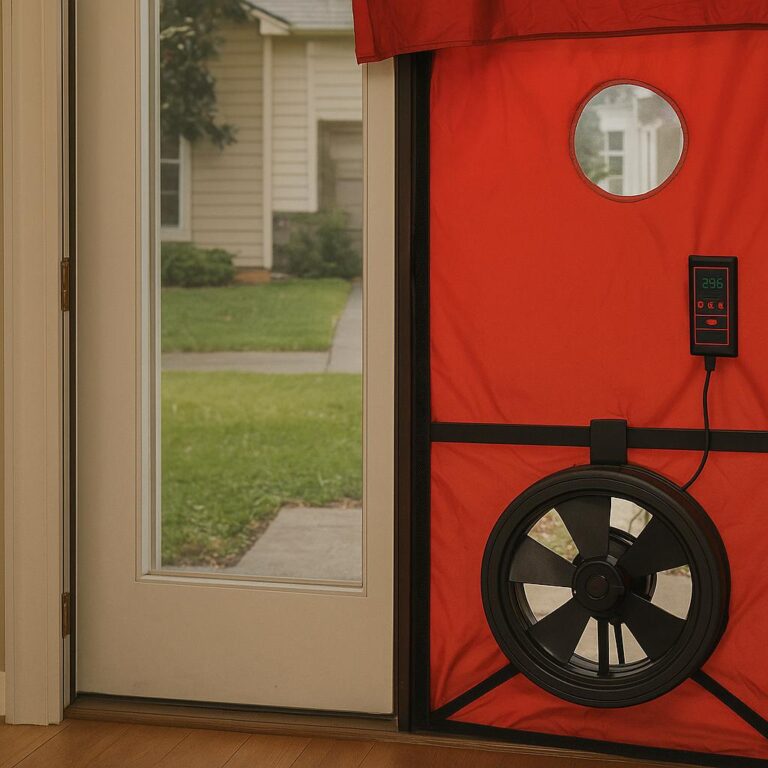
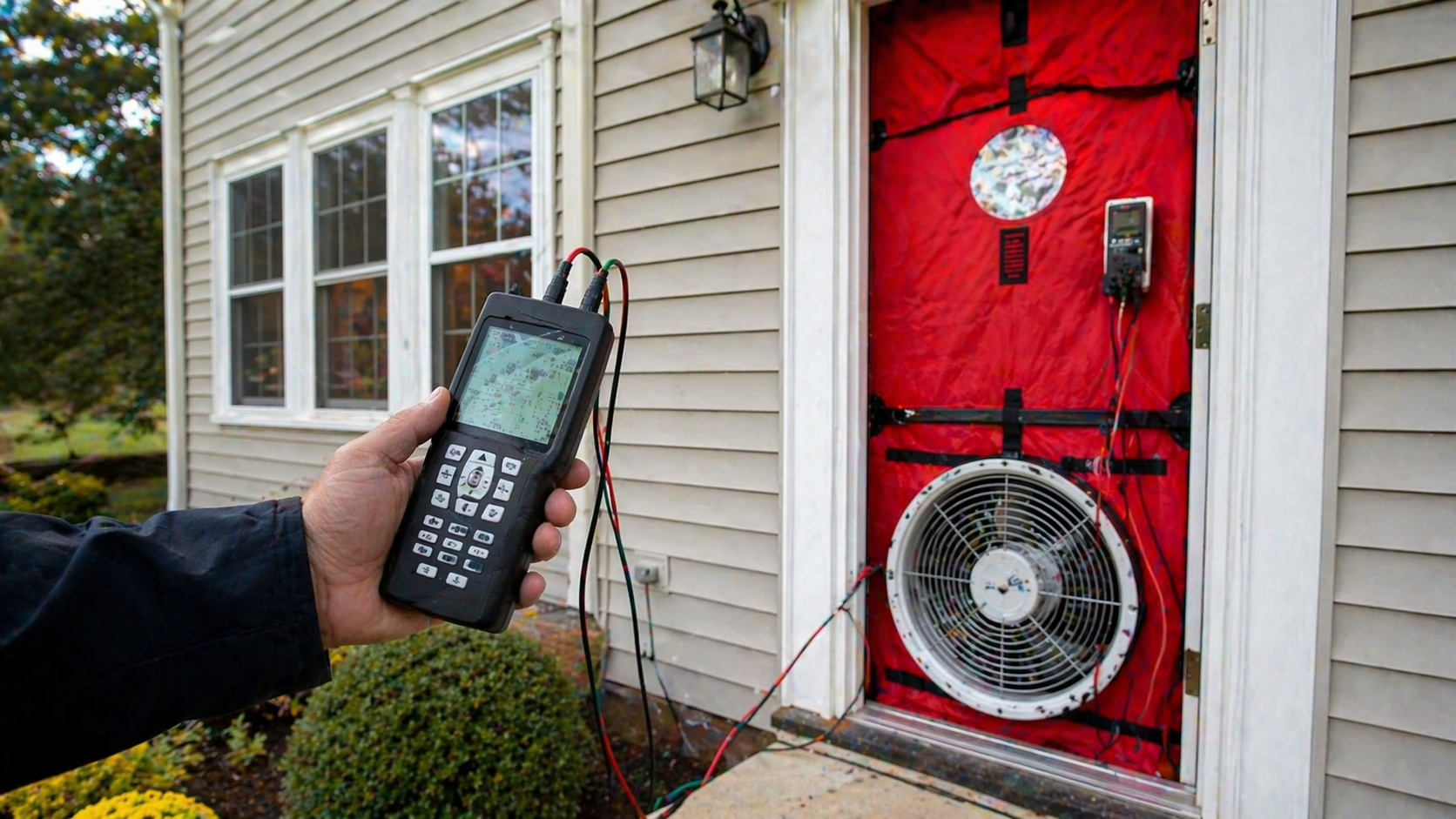
One of the most important tests in the HERS process is the blower door test. This measures how much air leaks in and out of the home.
A fan is mounted in an exterior door to depressurize the house, allowing the rater to identify leaks. Lower air leakage means better energy performance and a lower HERS score.
5. Duct Leakage Testing
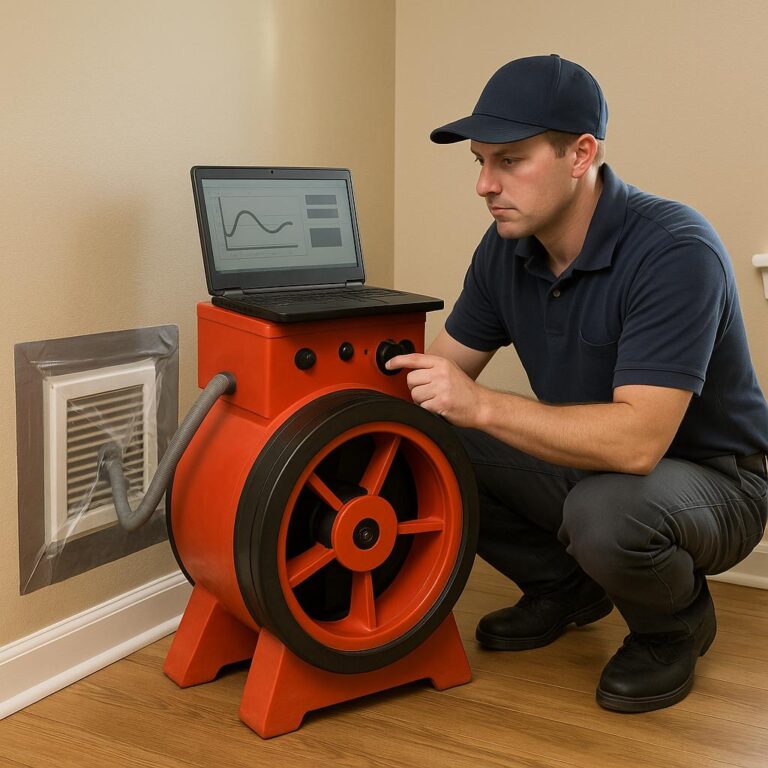
Leaky ductwork can waste a significant amount of energy. The rater conducts a duct leakage test to measure how much conditioned air escapes before reaching living spaces.
Sealed and efficient duct systems contribute to improved energy performance.
6. Water Heating and Lighting Efficiency
Energy-efficient water heaters and lighting systems play a key role in reducing overall energy consumption. Upgrades in these areas can significantly improve a home’s HERS score.
The HERS Index also considers:
- Water heater efficiency
- Lighting systems (e.g., LED vs. traditional bulbs)
- Appliances in some cases
Energy-efficient components in these areas can further reduce the overall score.
Understanding HERS Score Ranges
Once all data is collected and analyzed, the home receives a final HERS score. Understanding what that number means is key to evaluating energy performance.
- 130+: Older, inefficient homes with high energy usage
- 100: Standard new home built to code
- 85–70: Energy-efficient home with improvements beyond code
- 69–50: High-performance home with advanced efficiency features
- Below 50: Exceptional efficiency, often including renewable energy systems
- 0: Net-zero energy home
These ranges help homeowners and buyers quickly assess how a property compares in terms of energy use and cost savings.
How HERS Scores Impact Utility Costs
One of the biggest advantages of a HERS rating is its ability to predict energy expenses. Homes with lower scores typically consume less energy, which translates into lower monthly utility bills.
For example, a home with a HERS score of 70 is estimated to be about 30% more efficient than a standard new home. Over time, this can result in significant cost savings, making energy-efficient homes a smart long-term investment.
Benefits of Getting a HERS Rating
A HERS rating helps homeowners understand energy performance and identify areas for improvement. It can lead to lower utility bills, better comfort, and increased property value.
Even if you’re not building a new home, obtaining a HERS rating can provide valuable insights.
For homeowners:
- Identify areas for improvement
- Prioritize energy upgrades
- Reduce utility costs
For buyers:
- Compare homes objectively
- Understand long-term operating costs
- Make informed purchasing decisions
For builders:
- Showcase energy performance
- Meet energy code requirements
- Enhance marketability
Conclusion: Making Sense of Energy Efficiency
The HERS Index is a powerful tool for understanding and improving home energy performance. By combining detailed testing with standardized scoring, it provides a clear picture of how efficiently a home operates.
From insulation and HVAC systems to air leakage and lighting, every aspect of a home contributes to its final score. And with lower scores translating to reduced energy costs and greater comfort, the benefits are hard to ignore.
Whether you’re buying, building, or upgrading, a HERS energy rating offers the insights you need to make smarter, more sustainable decisions.
Get Expert Guidance with Home Energy Consultants
Ready to improve your home’s energy efficiency or learn more about your HERS score? Home Energy Consultants provides expert assessments and tailored solutions to help you optimize performance and reduce costs.
Contact us today to schedule your HERS rating and take the first step toward a more efficient, comfortable home!